Showing posts with label National Theatre. Show all posts

Wednesday, 2 June 2010

Ticket Offer: Lulu, Gate Theatre; Welcome to Thebes, National Theatre

Apologies for the lull in reviews and ticket offers around here, but I was back in the old country for a week's holiday and it's left me with a bit of a backlog of reviews: expect my thoughts on Henry VIII and All My Sons imminently! But to tide you over, here's not one but two ticket offers!

The first is from the Gate (London, not Dublin) who are offering £8 Gatecrasher tickets for their collaboration with Headlong, Lulu, on 10th June. Quite what a Gatecrasher ticket is or how one books it, I'm not quite sure, but I'm sure if you mention to Box Office that you read it on their Facebook page, they'll know what you are talking about!

The other is a special preview offer from the National and their world premiere of Welcome to Thebes by Moira Buffini. Book by Friday 4 June (so hurry!) and get top price tickets for £20 (or just £10 for performances 15 and 16 June). To book call 020 7452 3000 and quote ‘Thebes Preview Offer’ or book online and enter promotion code 2768.

Valid with top price tickets for performances 15-23 June only. Subject to availability.

Wednesday, 12 May 2010

Review: Love The Sinner, National Theatre

In the spirit of Love The Sinner, I feel some confession is in order for this review: I used to be a gay Christian in my teenage years. No prizes for guessing which fell by the wayside. But despite having chosen the flesh over the spirit at some point, the issue of the Church and homosexuality still provokes a strong response from me. So I was aware that I could either come away loving or loathing this production purely on personal grounds, rather than judging it on its own merit. Thankfully – or not, as the case may be – this production left me feeling entirely underwhelmed.

This is a play that suffers from that common sin (sorry) in a lot of new writing: trying to tackle as many big issues as possible in the two or so hours traffic of the stage. Drew Pautz’s script flits around the conflict between spirituality and sexuality, HIV and Aids, the ethics of IVF, religion in the workplace, persecution in Africa, immigration, even humane pest control. Part of this, I think, is Pautz’s understandable desire to show that there are no clear answers to questions of conscience. But by spreading itself so thin, nothing is dealt with satisfactorily and the result is a superficial affair. The play opens with an international conference of bishops of the Church of England, where there proves to be as much variance over ordering coffee as debating theology. I imagine that this could be pretty turgid stuff for those not versed in doctrine, but nevertheless, the performances of Louis Mahoney as Paul and Nancy Crane as Hannah make this quite watchable. But before a decision has to be made, it’s quickly dropped, never to return.

Instead, the story moves to Michael, a church layman first seen silently transcribing the proceedings, but who emerges as the potential 'sinner' of the title, having had a sexual encounter with Joseph, a porter at the hotel. The awkwardness following a random dalliance is played well by Jonathan Cullen and Fiston Barek, who for the most part, cope quite well throughout with Pautz's erraric narrative.

But, as often happens to me with portrayals of gay sex, I’m afraid my brain kicked in to logistics mode around this point. Don't worry, it did the same thing in Brokeback Mountain (“Just spit? Really?”). Here, I was preoccupied with figuring out the mechanics of what had gone on between Michael and Joseph. Had Michael been wearing the t-shirt during sex (which would be odd given how hot it’s clearly meant to be and the fact that he’s in his own hotel room) or had he put it on post-coitus, despite it being covered in the, err, aftermath? These may seem trite observations, but it had the feel of something that hadn't been thought through. And by keeping what happened between the sheets between the acts, it’s difficult to get any sense of why Michael and Joseph continue to be drawn to one another. The case of the one-night stand that won’t go away is a trope that can be played for comic or tragic value, but here it vacillates between both. Ordinarily, I would approve of a director's decision to allow the two to jostle alongside one another, except in this case, the one night-stand is also used as the vehicle for a bigger social and political issues, and so the comedy seems ill-placed. The fact that the Ugandan Anti-Homosexual Bill is still a possibility (although thankfully a diminishing one) and that homophobia is legally enshrined in other parts of Africa made it hard for me to get the joke. Particularly when the humour descends from some very intelligent set pieces – the conclave closing their eyes so as to avoid contact with the outside world is brilliantly done – to a moment bordering dangerously on racism at the end when the audience laughs at Joseph's naivety when he declares “I want to be a bishop” (despite others repeatedly noting his intelligence).

From his initial transgression, the play then wanders through a series of snapshots in Michael’s life, before things start to catch up with him. His broody high-strung wife Shelley is painfully two-dimensional; I'm not sure if it was possible to find sympathetic nuances to her character in Pautz's script, but Charlotte Randle certainly made no attempt. It's really quite understandable why Michael would choose to sleep with anyone else rather than her. Apart from her though, Matthew Dunster has gathered a solid cast for the most part. Ian Redford’s benevolent Santa Claus of an archbishop was certainly a saving grace. As was Anna Fleischle's wooden set, modified between scenes behind hotel-style blinds that offered a peek through the curtains at what was going on. Perhaps an appropriate image to end on, for a production that constantly felt like something half-glimpsed, a story barely told.

Tickets:

£10, semi-restricted view, level C. And boy, the National really aren’t kidding with ‘semi-restricted’. I would even go so far as to say that seats V36 and V37 might be considered ‘very restricted’, if indeed gradations of restriction are possible. Which I’m not sure they are. How does one quantify the difference between ‘restricted’ and ‘semi-restricted’? Anyway, from our perch on high we were able to see a lot of the action, provided it didn’t take place on stage right. Unfortunately, a fair bit did at times. My fellow theatregoer for the evening hadn’t even realised that Jonathan Cullen was in the first scene, tucked away as he was down there. Although he was much happier when he realised that our seats were prime location for Cullen’s full frontal nudity. One assumes the seats opposite give a full view of the back side of things. In a manner of speaking.

So swings and roundabouts really – mostly alright, with occasional intervals of emotional bald spot acting or cock, which, depending on your own views, might not be a selling point. To be honest, with how I felt about the show, leering leaning over the balcony for a tenner was more than sufficient.

Programme:

£1.50. The cheapest programme I’ve had in a while, but no bloody wonder – it’s nothing more than a glorified cast list with extensive bios and some black and white rehearsal shots. Certainly, no attempt to expand further on the thinking behind the play (perhaps they realised it’s not possible)? Worth it only if you are a reviewer or collect this sort of theatre ephemera.

Total Cost:

£11.50 … although more expensive if the two pre-show, interval and two post-show drinks are included. All necessary, I assure you.

Love The Sinner plays at the National Theatre until 10 July. Tickets £10-32. To book, visit their website or call 020 7452 3000 for more information.

Monday, 10 May 2010

Ticket Offer: The White Guard, National Theatre

The National Theatre's carrying on with more cheap ticket offers on best seats, for The White Guard this Wednesday: great seats for an incredible £15 this Wednesday 12th at 7.30pm - enter promo code 2694. Quite what constitutes a 'great seat' I don't know, but they do say that they're normally £39.50.

There's also a similar offer for performances this Monday, Tuesday and Thursday at 7.30pm, although they are £29 ... which isn't quite cheap enough for Views From the Cheap Seats. For those, enter promo code 2693.

For more info on this production, check out the NT's website.

Terms and Conditions:
Available on Valid seats normally £39.50. Subject to availability.

Thursday, 6 May 2010

Ticket Offer: Love The Sinner, National Theatre

Another offer from the National Theatre - this time for top price tickets for just £15 (save £13.50) for Love the Sinner on Thursday 6 May.

To book online, enter the promotion code 2684 before selecting your seats, or call Box Office on 020 7452 3000 and quote 'Preview Offer'. Tickets subject to availability.

Sadly, I've already booked my tickets for next Tuesday evening, but hopefully I should be posting my thoughts on this production not long after.

Find out more about the show at www.nationaltheatre.org.uk/sinner.

Saturday, 1 May 2010

Ticket Offer: The Habit Of Art, National Theatre

Exclusive Bank Holiday offer for Alan Bennett's The Habit Of Art at the National Theatre:

As a bank holiday treat, we're offering you best available seats for just £25 for matinees this Saturday and Sunday.

Alan Bennett's latest smash hit features a cast led by Richard Griffiths, Alex Jennings and Frances de la Tour.

Book online and enter promotion code 2687, or call 020 7452 3000 and quote ‘promotion 2687’.

Terms and Conditions:
Only valid for performances on 1st May (2.15pm), 2nd May (3pm). Subject to availability.

Wednesday, 28 April 2010

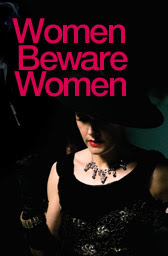
Review: Women Beware Women, National Theatre

The view of Women Beware Women as an alternative ending to Romeo and Juliet is borne out in the opening scenes of this production at the National Theatre. But the dangers in this play are not parental ire and family feuds, but the boredom of routine and, with it, the temptations of power, wealth and lust. Or as Livia suggests to her niece, “To take, or to reject, or to do both”. Ultimately, this is a play about having your cake and eating it too.

Leantio, a poor clerk, arrives home to his mother in Florence, bringing with him his still-veiled bride Bianca, freshly stolen from Venice and her parents. Called away on business, his pent-up wife quickly catches the eye of the Duke of Florence, who sets about claiming her for his own. Meanwhile, at court, Isabella is being forced by her father into marrying a foolish but wealthy ward, unaware that her uncle is incestuously in love with her. It is the central figure of Livia, a role Middleton seems to have written with relish, who unites these two plot strands by becoming a female Pandarus to these transgressive relationships.

Twice-widowed and “all of 39” (deliciously played for laughs at the improbability of this being true), Livia ensnares Bianca and Isabella with all the tools at her disposal – wealth, power, social connections, and the sheer force of her charisma. Harriet Walter is more than capable of the last, delivering a beautifully nuanced portrait of Livia, blending pleasure at her own virtuoso meddling with a subtle self-awareness of the perverted position she occupies. Her view on how Bianca will cope with her rape, that “Sin tastes at the first draught like wormwood water, / But drunk again, ‘tis nectar ever after” is as much a comment on her own actions as Bianca’s. Indeed, incorporated into Olly Fox’s (at times incongruous) jazzy score, these lines come to act as a refrain for the corruption of the play as a whole.

This corruption is evident in Marianne Elliott’s vision of Florence, which is dominated by a crumbling monument to “Cosmos Medice”, all reflective black surfaces and snaking stairways. Lez Brotherston’s multi-level staging is used to great effect, particularly in the infamous scene where Bianca is raped in the picture gallery, while her mother-in-law and supposed protector is distracted by a game of chess with Livia. The National’s reliance on the revolve, however, is much less successful, culminating in a dizzying dénouement, reminiscent of the opening scene of The Revenger’s Tragedy at the same theatre in 2008 (knowing homage to another Middleton production, or shameless rip-off?). The set spins relentlessly, confusingly so, and excised of most of the dialogue, one is left with no sense of who killed whom or why.

It is this attempt at finding believable motivation in the ridiculous satire that ultimately is the play’s undoing. Middleton’s strength is his irony-laced satire, cruel and sardonic, and although Elliott seems to want to explore just how black the comedy can get before becoming tragic, most of the production is never fast or slick enough to tread that line. Although the ward is meant to provoke the most (in every sense) explicit laughter, Harry Melling’s fool rings the painful one-note of misogyny a bit too eagerly. Vanessa Kirby as Isabella and Lauren O’Neil as Bianca offer solid performances, and Samuel Barnett‘s Leantio is a sympathetic cuckold.

But it is Walter’s already-praised Livia who manages to plumb the lines for their simultaneous humour and gravitas, resulting in a bittersweet guilt on our part for becoming complicit in her machinations, and who would easily convince us to drink again of the wormwood in the hope of nectar.

Ticket:
£10, Circle C section, left hand side. This offered a great view of the whole stage, as well as a glance into the huge open backstage area behind the revolve. Given the production, I was more than happy with a £10 Travelex seat.

Programme:
£3

Glass of Wine:
£3.95

Total Cost:
£16.95

Women Beware Women is booking at the National Theatre until 4 July. Tickets from £10. Visit www.nationaltheatre.org.uk for more info.